

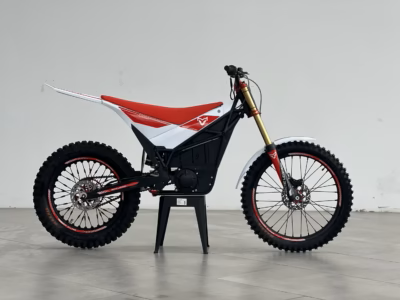
Learning to ride off-road is a gradual process. A rider who starts with smooth dirt paths may eventually become interested in rocky climbs, tight turns, steep descents, and other technical terrain. An Electric dirt bike can provide an engaging platform for this progression, but improving as an off-road rider depends far more on developing control and judgment than simply increasing speed.
Moving from easy trails to challenging terrain should be approached as a series of manageable steps. Riders who build their skills gradually are better prepared to deal with changing surfaces, unexpected obstacles, and more demanding sections of trail.
Begin With Basic Bike Control
Before attempting difficult terrain, riders should become comfortable with the motorcycle’s basic controls. Throttle response, braking, steering, and body position all have a significant effect on how a bike behaves away from paved roads.
Practice accelerating smoothly rather than making sudden throttle inputs. Become familiar with both brakes and learn how the motorcycle reacts when stopping on different surfaces.
Low-speed exercises can also be useful. Riding slowly through a controlled area helps develop balance and steering precision without creating unnecessary risk. These fundamentals become increasingly important as the trail becomes narrower or more uneven.
Learn to Read the Trail
Experienced off-road riders do not simply react to obstacles when they reach them. They continually look ahead and assess the terrain.
When approaching a trail section, identify rocks, roots, ruts, loose soil, puddles, and changes in elevation. Consider which line offers the most manageable path and whether your current speed is appropriate.
This habit becomes particularly valuable on technical terrain. Looking several meters ahead gives you more time to adjust your position and prepare for an obstacle rather than reacting at the last moment.
Progress Through Different Surfaces
Once basic control becomes comfortable, riders can begin introducing more varied surfaces. Firm dirt is generally easier to manage than loose gravel, wet soil, or deep sand, so progression should be gradual.
Practice maintaining a steady throttle while crossing loose sections. Avoid making abrupt steering movements when traction is limited. On wet ground, smooth inputs become even more important because braking or accelerating aggressively can reduce stability.
Each surface teaches something different. Riders can use these experiences to understand how changes in traction affect braking, cornering, and acceleration.
Improve Cornering Technique
Cornering is an important skill for anyone progressing beyond beginner trails. Rather than entering every turn quickly, focus first on choosing a suitable line and maintaining control.
Approach a corner at a manageable speed, look through the turn, and keep your movements smooth. On loose terrain, sudden braking or acceleration can cause the tires to lose grip.
As confidence improves, riders can gradually experiment with different lines and speeds. The goal should be consistency rather than trying to achieve the fastest possible corner.
Approach Hills and Descents Carefully
Elevation changes introduce another level of challenge. Before climbing a steep section, assess its surface and identify where you want the motorcycle to travel.
Maintain controlled momentum rather than relying on sudden acceleration halfway up the hill. If the surface is loose, excessive throttle can cause the rear wheel to spin.
Descending requires equal attention. Control your speed before entering the slope and use the brakes smoothly. Keep your eyes focused toward the intended line rather than directly at the obstacle immediately in front of the front wheel.
Develop Technical Riding Skills
Technical trails often combine several challenges at once. A section may include rocks, tight turns, steep ground, and uneven surfaces within a short distance.
Riders should approach these areas slowly and break them into individual problems. Instead of thinking about the entire obstacle, identify where the front wheel needs to go, where the rear wheel will follow, and where you need to adjust your body position.
Models such as Surron have become part of the growing electric off-road market, giving riders another option for developing their skills on appropriate terrain. Regardless of the motorcycle, however, technique remains more important than equipment alone.
Know When to Stop
Progress does not mean completing every trail section. Good judgment includes recognizing when conditions or obstacles exceed your current ability.
If a climb looks too steep, the terrain has become dangerously slippery, or fatigue is affecting concentration, turning around can be the smartest choice. Riding with experienced people can also provide useful guidance when exploring unfamiliar terrain. Improvement comes from repeated practice, not from taking unnecessary risks.
Conclusion
Progressing from beginner trails to technical terrain requires patience and consistent practice. Riders should first master basic controls, then gradually introduce more challenging surfaces, corners, hills, and obstacles.
The most effective progression is one that builds confidence without sacrificing control. By reading the trail ahead, using smooth inputs, practicing regularly, and recognizing personal limits, riders can develop the skills needed to approach increasingly technical off-road terrain with greater confidence.