

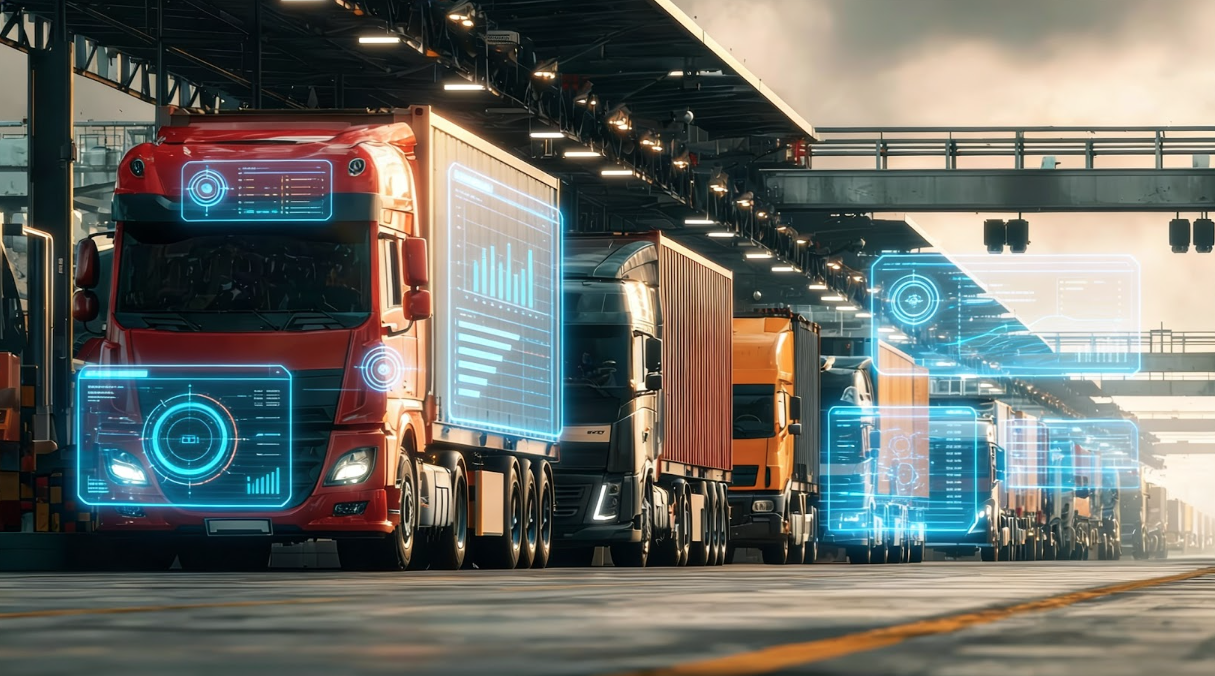
For most of the history of commercial vehicles, “diagnostics” meant one of two things: a mechanic listening to the engine and making a face, or plugging in a scan tool after the check-engine light came on. Both approaches share the same problem. They’re reactive. Something has already gone wrong by the time anyone looks at it.
AI-powered diagnostics work differently. They don’t wait for a fault code. They watch the vehicle’s behavior continuously, compare it against known patterns, and tell you something is going wrong before the vehicle itself knows it. That’s not a small improvement. It’s a different category of capability, and it’s quietly rewriting how fleet operators think about vehicle health.
What “AI-powered” actually means here (and what it doesn’t)
The term gets thrown around loosely, so let’s be specific. AI-powered diagnostics in fleet management means machine learning models analyzing real-time sensor data from vehicles to detect anomalies that signal early-stage component degradation. We’re talking engine temperature, oil pressure, battery voltage, coolant flow, exhaust patterns, fuel injection timing. Dozens of parameters, monitored continuously.
It does not mean a chatbot answering questions about your truck. It does not mean a dashboard with prettier graphs. The AI is doing pattern recognition at a scale and speed that human technicians can’t match.
Intangles’ predictive health monitoring is a good example of what this looks like in practice. Their system uses Digital Twin technology, a virtual copy of each monitored vehicle, and continuously compares real-time sensor data against physics-based models and historical patterns. When the real vehicle starts behaving differently from its digital twin, the system flags the deviation. A technician would need weeks of data and a lot of experience to spot the same pattern. The AI catches it in hours.
The fault code problem
Something most people outside of fleet maintenance don’t realize: a diagnostic trouble code (DTC) is a lagging indicator. By the time the code triggers, the component has already failed or is actively failing. A DTC for an overheating engine means the engine is overheating right now. The damage may already be done.
AI diagnostics work upstream of fault codes. They identify the conditions that lead to failure, not the failure itself. Coolant temperature climbing 2 degrees per week over a month. Oil pressure dropping slightly under load. Battery voltage recovery time getting longer after each start cycle. None of these would trigger a DTC. All of them signal a problem developing.
Intangles’ system catches exactly this kind of slow-burn degradation. Their predictive health monitoring tracks engine coolant temperature, battery and alternator health, air intake systems, diesel particulate filter performance, and after-treatment systems. When any of these start trending outside normal parameters for that specific vehicle, the fleet manager gets an alert with severity classification: minor, moderate, or critical. That classification matters because not every alert needs the same response speed.
What this changes for fleet maintenance teams
The shift from “fix it when it breaks” to “fix it before it breaks” sounds simple, but it changes how maintenance departments operate in ways that aren’t immediately obvious.
Technician time gets reallocated. In a reactive model, a big chunk of a technician’s day goes to diagnosis. Plug in the scanner, read the codes, interpret the codes, figure out which ones are real problems and which are sensor noise. With AI diagnostics feeding pre-identified issues to the shop, technicians spend less time figuring out what’s wrong and more time actually fixing it. One fleet operator I read about cut average diagnosis time from 45 minutes to under 10 after implementing AI-based health monitoring.
Parts ordering becomes predictive too. If the system flags that a turbocharger on Vehicle #31 is showing early-stage wear, the parts department can order the replacement before the truck comes in. No waiting three days for a part while the vehicle sits in the shop burning money. This sounds minor, but parts availability is one of the biggest drivers of extended downtime in fleet maintenance.
Maintenance scheduling gets smarter. Instead of pulling vehicles off the road on arbitrary calendar intervals, you service them when the data says they need it. Intangles’ operations automation ties directly into this, helping fleet managers schedule and track service tasks based on actual vehicle condition rather than mileage-based guesswork. Some trucks run harder than others. The AI knows which ones.
The accuracy question
Any fleet manager hearing about AI diagnostics for the first time asks the same question: “How many false alarms am I going to get?” It’s the right question. Alert fatigue kills adoption faster than anything else. If the system cries wolf every day, the maintenance team starts ignoring it, and you’re back to reactive maintenance with extra steps.
Accuracy depends on two things: the quality of the data coming in, and how much failure data the AI model has been trained on. Early telematics systems that tried predictive features were often terrible at this because they didn’t have enough training data to distinguish real anomalies from normal variation.
This is where platforms with large vehicle populations have an advantage. Intangles monitors over 175,000 assets across 17 countries. That’s a massive dataset of vehicle behavior, failure patterns, and environmental conditions feeding back into their models. Their published accuracy rate for component-level failure prediction sits at 95%. Even if you discount that slightly for real-world messiness, it’s high enough that false alarm fatigue becomes manageable rather than crippling.
Where this goes next
AI diagnostics today mostly flag problems and classify severity. The next step, and some platforms are already working on it, is prescriptive maintenance: not just telling you something is wrong, but telling you exactly what to do about it, which part to replace, what the root cause is, and how urgent the repair is relative to the vehicle’s current assignment.
Intangles’ driving behavior monitoring already feeds into this loop in an interesting way. If the AI detects that a specific driver’s habits, hard braking, aggressive acceleration, excessive idling, are accelerating wear on specific components, the system can connect the cause to the effect. Vehicle #55’s brake pads are wearing 40% faster than fleet average. The AI identifies the driver behavior causing it. The fleet manager can address both the symptom and the root cause.
That’s where vehicle health monitoring stops being just a maintenance tool and becomes an operational intelligence layer.
Frequently asked questions
What is AI-powered vehicle health monitoring?
AI-powered vehicle health monitoring uses machine learning models to analyze real-time sensor data from commercial vehicles and detect early signs of component degradation before traditional fault codes trigger. Intangles’ predictive health monitoring uses Digital Twin technology to create a virtual replica of each vehicle, comparing real-time data against physics-based models to identify deviations that indicate developing problems. This gives fleet managers advance warning of failures across engine, battery, air intake, exhaust, and after-treatment systems.
How does AI diagnostics differ from traditional OBD fault codes?
Traditional OBD fault codes are reactive, they trigger after a component has already failed or is actively failing. AI diagnostics work upstream by identifying the conditions that lead to failure. Intangles’ system detects patterns like gradual coolant temperature increases, declining oil pressure under load, or battery voltage recovery slowdowns, none of which would set off a fault code but all of which signal developing problems. Fleet managers get alerts classified by severity (minor, moderate, critical) so they can prioritize response.
How accurate are AI-based vehicle health predictions?
Accuracy depends on data quality and the size of the training dataset. Platforms monitoring larger vehicle populations produce more reliable predictions because their models have seen more failure patterns across varied conditions. Intangles monitors over 175,000 assets across 17 countries, and their published component-level failure prediction accuracy is 95%. Larger datasets also reduce false alarm rates, which is the biggest practical barrier to fleet teams trusting and acting on AI alerts.
Can AI diagnostics reduce fleet maintenance costs?
Yes. AI diagnostics reduce costs in three ways: fewer emergency roadside repairs (which cost 2-3x more than planned shop repairs), shorter diagnosis time for technicians (one operator cut average diagnosis time from 45 minutes to under 10), and better parts planning since degradation alerts let parts departments order replacements before the vehicle arrives. Intangles’ operations automation connects predictive alerts directly to service scheduling, so flagged issues turn into planned work orders rather than emergency tickets.
Does AI vehicle health monitoring work for both diesel and electric fleets?
Yes. For diesel vehicles, AI monitoring tracks engine health, fuel systems, exhaust after-treatment, and drivetrain components. For electric vehicles, it monitors battery state-of-health, charging patterns, thermal management, and capacity degradation over time. Intangles’ predictive health monitoring covers both vehicle types, and their EV monitoring provides specific capabilities like state-of-charge tracking and distance-to-empty predictions. Fleets running mixed diesel-electric operations can manage both on a single platform.